In my last post I concluded our trip by telling you about Berlin; I encourage you to read it, since this post will probably hide it from your view. But instead of posting my pictures at the bottom of that post, where they're most likely to be lost, I wanted to share them here. They are more or less in chronological order.
Part 1: Oberursel and Frankfurt
https://www.facebook.com/media/set/?set=a.10151473448848788.1073741825.500163787&type=1&l=95ef0c23d4
Part 2: Eisenach and the Wartburg
https://www.facebook.com/media/set/?set=a.10151473481033788.1073741826.500163787&type=1&l=f7320a5937
Part 3: Erfurt
https://www.facebook.com/media/set/?set=a.10151473497668788.1073741827.500163787&type=1&l=53065ff0ce
Part 4: Eisleben and Wittenberg
https://www.facebook.com/media/set/?set=a.10151473516913788.1073741828.500163787&type=1&l=adcdc4bef9
Part 5: Leipzig
https://www.facebook.com/media/set/?set=a.10151473569028788.1073741829.500163787&type=1&l=c247f4ca81
Part 6: Dresden
https://www.facebook.com/media/set/?set=a.10151473604203788.1073741830.500163787&type=1&l=8748912f38
Part 7: Berlin
https://www.facebook.com/media/set/?set=a.10151473610868788.1073741831.500163787&type=1&l=95b7a1c181
I hope you enjoy them as must as we enjoyed our trip!
Showing posts with label Lutherland. Show all posts
Showing posts with label Lutherland. Show all posts
Sunday, April 28, 2013

Saturday, April 27, 2013
Continuing our Trip: Berlin
I'm finally getting around to finishing the telling of my trip with my parents back in February. Not much happened with me in March, but I just got tired of writing blog posts, and so I neglected it for a little while. Hopefully a few posts will be coming out soon.
So my parents and I got on the train from Dresden to Berlin; it was a "Eurocity" train, which was more direct, since it only stopped at major European cities. Being more direct meant that it was also quicker and fuller. I was lucky enough to have reserved seats, so we didn't have to split up. We got into Berlin about 7:00 or so, and it wasn't hard to take the various trains to Köpenick from there; if you remember, that was where I had spent my first month in Germany with Ben and Sonja Müller. They had graciously offered to host us, so there was a nice supper waiting for us. We had some beer and good conversation.
The next day we toured the Alexanderplatz and the Museum Island. Our first stop was St. Mary's, one of the oldest churches.

Finally, we visited the German Historical Museum. To be honest, I think it's the best museum in Berlin because of its presentation and layout. The Pergamon and other museums in Berlin have very interesting artifacts, but they don't quite tell a story like the German Historical Museum does. I think my parents enjoyed it, though it was quite a lot of history to digest in the four hours that we were there.
We had hoped to see at least the Pergamon Museum after the German Historical Museum, but the museums in Germany close earlier than normal from November to March, so it was already closed for an hour when we tried it. This was a fitting conclusion to our attempts at visiting various places in the non-tourist season.
That evening Dad, Ben, and I went to a small brewery nearby that had a nice range of beers. We talked theology, church politics, and about our church bodies. Mom stayed back with Sonja and the baby, Noemi.
The next day was a Sunday, and we went to St. Mary's Zehlendorf, where Pastor Martens serves. Although I hadn't planned it this way, there was a gathering of theological students from around Europe also gathering at that time in Berlin, and they were at St. Mary's as well. Pastor had translated his sermon into English for them, so my parents also got a translation. I declined, but looked over the sermon later to see how much I understood.


From there we toured Berlin some more, doing a bit more walking this time. We saw the Brandenburg Gate, the Reichstag, the Victory Column, and the Tiergarten first, then headed to the Holocaust Memorial. We also saw a part of the Berlin Wall, as well as Checkpoint Charlie. It was a very heavy walking day.


We returned to the Müllers, and my parents then flew out the next day fairly early in the morning. All in all, I'm glad they came and saw Germany with me. I'm rarely alone with them, since when I'm home I'm surrounded by siblings as well, so it was good to spend a longer amount of time with Mom and Dad. I know they appreciated the trip as well; they hadn't made a trip like this in a long time. So thank you, Mom and Dad, for coming. I really appreciated it.


So my parents and I got on the train from Dresden to Berlin; it was a "Eurocity" train, which was more direct, since it only stopped at major European cities. Being more direct meant that it was also quicker and fuller. I was lucky enough to have reserved seats, so we didn't have to split up. We got into Berlin about 7:00 or so, and it wasn't hard to take the various trains to Köpenick from there; if you remember, that was where I had spent my first month in Germany with Ben and Sonja Müller. They had graciously offered to host us, so there was a nice supper waiting for us. We had some beer and good conversation.
The next day we toured the Alexanderplatz and the Museum Island. Our first stop was St. Mary's, one of the oldest churches.
One of their favorite places this day was St. Nicholas' Church, where Paul Gerhardt served as pastor and Crüger as cantor.

We had hoped to see at least the Pergamon Museum after the German Historical Museum, but the museums in Germany close earlier than normal from November to March, so it was already closed for an hour when we tried it. This was a fitting conclusion to our attempts at visiting various places in the non-tourist season.
That evening Dad, Ben, and I went to a small brewery nearby that had a nice range of beers. We talked theology, church politics, and about our church bodies. Mom stayed back with Sonja and the baby, Noemi.
The next day was a Sunday, and we went to St. Mary's Zehlendorf, where Pastor Martens serves. Although I hadn't planned it this way, there was a gathering of theological students from around Europe also gathering at that time in Berlin, and they were at St. Mary's as well. Pastor had translated his sermon into English for them, so my parents also got a translation. I declined, but looked over the sermon later to see how much I understood.
Some pictures of St. Mary's


From there we toured Berlin some more, doing a bit more walking this time. We saw the Brandenburg Gate, the Reichstag, the Victory Column, and the Tiergarten first, then headed to the Holocaust Memorial. We also saw a part of the Berlin Wall, as well as Checkpoint Charlie. It was a very heavy walking day.


We returned to the Müllers, and my parents then flew out the next day fairly early in the morning. All in all, I'm glad they came and saw Germany with me. I'm rarely alone with them, since when I'm home I'm surrounded by siblings as well, so it was good to spend a longer amount of time with Mom and Dad. I know they appreciated the trip as well; they hadn't made a trip like this in a long time. So thank you, Mom and Dad, for coming. I really appreciated it.


 Posted with Blogsy
Thursday, March 28, 2013
Continuing our trip: Leipzig and Dresden
The next day (Thursday the 21st) we toured Leipzig. We bought a day card, so we were able to take the metro first to the main train station, then to the places that were further away. The inner city was the center of most of our sight seeing- it held the Bach museum, several churches, and the city halls. This was definitely going to be our Bach day.
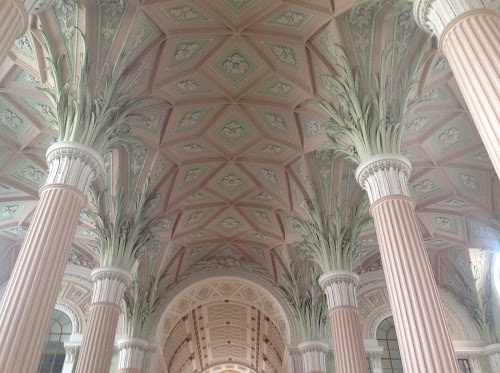
Our first sight was St. Nicholas' Church. It was one of the primary churches in the city, the one at which Bach primarily played, though he is buried in another city church, St. Thomas'.



Leipzig University was just next door, so we took a quick look, though all of the buildings had been renovated and looked like a normal university. This was where C.F.W. Walther had graduated from, as well as Goethe, Nietzsche, and Angela Merkel. There wasn't much, so we walked further to the old city hall. Here was a monument to Goethe, the famous German poet; I think he's buried here.

But from there we visited the St. Thomas' church and the Bach museum, which was close by. Although Bach primarily played at St. Nicholas', he was buried in a small church on the outskirts of Leipzig. When it was bombed or burned to the ground, they moved his coffin to St. Thomas', where it remains today.


We didn't get many pictures from inside the Bach museum, but it was definitely worth our time- probably in the top 5 of the places that we visited in Germany! If you ever find yourself in Leipzig, you should definitely plan on a few hours here.
We did get a picture of an organ that Bach himself probably played. It's pretty dilapidated, but they restored as much as they could, pointing out what was original and what wasn't.

Finally, we took the tram to the Battle of the Nations Monument. The Battle of the Nations occurred near Leipzig in 1813. Since this year is its 200th Anniversary, it was under construction, since they're hoping to have it beautiful and ready for the summer. The Battle of the Nations was a battle in which Napoleon and his Rhine Confederation were stopped by the Prussian, Russians, Swedes, and Austria. Involving 600,00 soldiers on both sides, it was the largest battle in Europe prior to WWI. Napoleon had been recovering from his failed Russian campaign, and his army was not the same that had conquered most of Europe. After his defeat here, the Prussians and friends pressed the attack, invading France and sending Napoleon into exile to the Island of Elba. If you know your history, Napoleon returned and was finally defeated at the Battle of Waterloo in 1815, again going into exile, this time dying there in 1821. After this Prussia exerted much more influence over the surrounding German states, eventually bringing them all together, after wars with France and Austria, into the "Germany Empire." So there's your history lesson for the day. It's a very quick overview, but it's very interesting as it relates to the build-up to the world wars.
We ate at a very nice restaurant in Leipzig just outside of St. Nicholas'- we had a plate full of different kinds of meat and wurst that we could pick and choose as we wanted. It was all very delicious.
From there we took the train to Dresden, where we stayed at Pastor Andreas Rehr's guest apartment near the parsonage. We didn't spend much time with them in the evening, but we had a wonderful breakfast with him and his wife, and Pastor even showed up around his church, which is the largest church building in the SELK (on permanent loan from the State Church of Germany). I've taken some pictures of this church before, but you can see it again here.


After sightseeing in Dresden we met up again at the Rehr's, got our luggage, said good-bye, and found the train that we needed to be on. It was a "Euro-city" train, and it was packed. Luckily I had reserved seats, so we didn't need to find seats where there weren't any. We got into Berlin and took the various trains to Köpenik and the Müllers, where we stayed for a few nights. I'll pick up on that in the next blog post.
Our first sight was St. Nicholas' Church. It was one of the primary churches in the city, the one at which Bach primarily played, though he is buried in another city church, St. Thomas'.

The pillars and ceiling reminded me of St. Paul's- Fort Wayne- it looked like plants were growing from their top and growing into the ceiling.


This remembered Bach's position at St. Nicholas'

Leipzig University was just next door, so we took a quick look, though all of the buildings had been renovated and looked like a normal university. This was where C.F.W. Walther had graduated from, as well as Goethe, Nietzsche, and Angela Merkel. There wasn't much, so we walked further to the old city hall. Here was a monument to Goethe, the famous German poet; I think he's buried here.

But from there we visited the St. Thomas' church and the Bach museum, which was close by. Although Bach primarily played at St. Nicholas', he was buried in a small church on the outskirts of Leipzig. When it was bombed or burned to the ground, they moved his coffin to St. Thomas', where it remains today.


We got some nice pictures of the stained glass windows with Mom's camera.


We didn't get many pictures from inside the Bach museum, but it was definitely worth our time- probably in the top 5 of the places that we visited in Germany! If you ever find yourself in Leipzig, you should definitely plan on a few hours here.
We did get a picture of an organ that Bach himself probably played. It's pretty dilapidated, but they restored as much as they could, pointing out what was original and what wasn't.

Finally, we took the tram to the Battle of the Nations Monument. The Battle of the Nations occurred near Leipzig in 1813. Since this year is its 200th Anniversary, it was under construction, since they're hoping to have it beautiful and ready for the summer. The Battle of the Nations was a battle in which Napoleon and his Rhine Confederation were stopped by the Prussian, Russians, Swedes, and Austria. Involving 600,00 soldiers on both sides, it was the largest battle in Europe prior to WWI. Napoleon had been recovering from his failed Russian campaign, and his army was not the same that had conquered most of Europe. After his defeat here, the Prussians and friends pressed the attack, invading France and sending Napoleon into exile to the Island of Elba. If you know your history, Napoleon returned and was finally defeated at the Battle of Waterloo in 1815, again going into exile, this time dying there in 1821. After this Prussia exerted much more influence over the surrounding German states, eventually bringing them all together, after wars with France and Austria, into the "Germany Empire." So there's your history lesson for the day. It's a very quick overview, but it's very interesting as it relates to the build-up to the world wars.
We ate at a very nice restaurant in Leipzig just outside of St. Nicholas'- we had a plate full of different kinds of meat and wurst that we could pick and choose as we wanted. It was all very delicious.
From there we took the train to Dresden, where we stayed at Pastor Andreas Rehr's guest apartment near the parsonage. We didn't spend much time with them in the evening, but we had a wonderful breakfast with him and his wife, and Pastor even showed up around his church, which is the largest church building in the SELK (on permanent loan from the State Church of Germany). I've taken some pictures of this church before, but you can see it again here.


We left our bags there, planning to pick them up later, and walked through Dresden. Our first and primary stop was the Frauenkirche, and it certainly didn't disappoint. This time we were able to actually go inside- if you remember, the last time I was in Dresden there was a concert, so it was closed to tourists. Unfortunately a woman pastor gave a message while we were there, and I wasn't too pleased with what I understood.


And here's the porcelain "Procession of Princes"

It was bitterly cold while we were there, though- the wind whipped up from the river and chilled us to the bone. We were glad to go inside when we could. This was probably the coldest day of our trip.
Here you can see the Dresden Opera; we didn't go inside.

The Catholic "Hofkirche," or "Palace Church"


After sightseeing in Dresden we met up again at the Rehr's, got our luggage, said good-bye, and found the train that we needed to be on. It was a "Euro-city" train, and it was packed. Luckily I had reserved seats, so we didn't need to find seats where there weren't any. We got into Berlin and took the various trains to Köpenik and the Müllers, where we stayed for a few nights. I'll pick up on that in the next blog post.
Thursday, February 28, 2013
Continuing our trip: Eisleben and Wittenberg
After staying overnight in Eisleben, we set out a bit earlier the next day (Wednesday, Feb. 20th) to see if anything would be open before 10. It turned out not to be the case, but we walked to St. Anne's and back and got some pictures of the outside. The congregation had been the first to accept the Reformation. It wasn't high on our priority list, but it was something to see when everything else was closed. It wasn't open, but we saw it from the outside.
We first visited Luther's birth house, which had been turned into a museum. We were pleased; it was a well-thought out museum and had enough to interest us, especially about Luther's parents and his youth in Eisleben and the nearby Mansfeld. The nearby St. Peter and Paul church was going under some renovation, but they let us in. It looked pretty new; there was no longer a baptismal font, but a baptismal pool in the floor near the chancel. I don't think they have the baptismal font in which Luther was baptized. Then we head back to the market plaza to see if St. Andrew's Church would be open, but it was not- it's closed from Nov. until March due to the heating costs. It's where Luther preached his last sermon. Nearby is his death house, and the museum that they're building there. This museum wasn't impressive at all. They had some displays about death in general and thoughts about it, but there wasn't as much about Luther as I'd hoped. We saw a copy of his death mask, as well as other artifacts, but it was disappointing.
Unfortunately I don't have any pictures of these places, since they're all on my parents' camera. I tended not to take outside pictures with my iPad when it was snowy outside. You'll see them soon when I get them all posted to Facebook.
Then we made our way back to the train station and rode to Wittenberg. This was the only day in which we saw more than one city, and part of me wishes that we could've slowed down a bit here, but it was either fit the two smallest cities into one day, or cut one out of our itenerary. So we basically had an afternoon to see Wittenberg.
This wasn't so bad, but I'd forgotten that everything closes earlier in the winter. We made it to our first destination just fine: the Luther House. This was probably our best museum of the whole trip. We all enjoyed it, and it had the most artifacts and the most complete history of any city that we visited. I can't recommend this museum enough, especially to those who are going on Luther tours. Here are some of the pictures that I took while we were there.


Next we tried to make it into the city church, St. Mary's, but it was already locked at 4pm! We were obviously disappointed, but our disappointment increased when we noticed that the Castle Church was also closed, but this time due to renovation! This also meant that there was scaffolding that almost covered the famous castle church door and its famous mural above the door. This is supposedly the place where Luther nailed the 95 Theses, but that history is debateable. Nonetheless, I'll post the pictures later, since they were taken with the camera. Obviously winter is not the time to travel Germany.
Finally we walked back to the Melanchthon House, hoping that it would be open, which it was. It wasn't the most spectacular museum, but they're renovating it too, getting ready for the 500th Anniversity of the Reformation. If anything, it was simplistic. They covered the basics of Melanchthon's life and works, but there wasn't a lot of historical information. His changing of the Augsburg Confession was seen as "ecumenical," so I was particularly disappointed about that.


That's about it between Eisleben and Wittenberg. It'd be worth it for me to come back to Wittenberg at least, which I may still do. It was quite an exhausting day visiting two cities, so I welcomed our stay in Leipzig. The hotel accomodated the three of us in one room, but we had to walk quite a way to get there. My parents were troopers though, and we made it without too much trouble.
We first visited Luther's birth house, which had been turned into a museum. We were pleased; it was a well-thought out museum and had enough to interest us, especially about Luther's parents and his youth in Eisleben and the nearby Mansfeld. The nearby St. Peter and Paul church was going under some renovation, but they let us in. It looked pretty new; there was no longer a baptismal font, but a baptismal pool in the floor near the chancel. I don't think they have the baptismal font in which Luther was baptized. Then we head back to the market plaza to see if St. Andrew's Church would be open, but it was not- it's closed from Nov. until March due to the heating costs. It's where Luther preached his last sermon. Nearby is his death house, and the museum that they're building there. This museum wasn't impressive at all. They had some displays about death in general and thoughts about it, but there wasn't as much about Luther as I'd hoped. We saw a copy of his death mask, as well as other artifacts, but it was disappointing.
Unfortunately I don't have any pictures of these places, since they're all on my parents' camera. I tended not to take outside pictures with my iPad when it was snowy outside. You'll see them soon when I get them all posted to Facebook.
Then we made our way back to the train station and rode to Wittenberg. This was the only day in which we saw more than one city, and part of me wishes that we could've slowed down a bit here, but it was either fit the two smallest cities into one day, or cut one out of our itenerary. So we basically had an afternoon to see Wittenberg.
This wasn't so bad, but I'd forgotten that everything closes earlier in the winter. We made it to our first destination just fine: the Luther House. This was probably our best museum of the whole trip. We all enjoyed it, and it had the most artifacts and the most complete history of any city that we visited. I can't recommend this museum enough, especially to those who are going on Luther tours. Here are some of the pictures that I took while we were there.
Dad in front of the pulpit that Luther would preach from.

An interesting mural from the house about the Ten Commandments

Martin Luther wearing his "doctor's hat" (and looking quite young)

Luther and Hus communing various princes

An original room in which Luther would have worked

And, of course, a beer mug from which Luther had drunk

And finally, we saw a Luther library with every copy of the compilation of Luther's works. Can you name the various collections?


Finally we walked back to the Melanchthon House, hoping that it would be open, which it was. It wasn't the most spectacular museum, but they're renovating it too, getting ready for the 500th Anniversity of the Reformation. If anything, it was simplistic. They covered the basics of Melanchthon's life and works, but there wasn't a lot of historical information. His changing of the Augsburg Confession was seen as "ecumenical," so I was particularly disappointed about that.
If you want to know what he looked like.

The Unaltered Augsburg Confession (what the LCMS subscribes to)

The Altered Augsburg Confession

That's about it between Eisleben and Wittenberg. It'd be worth it for me to come back to Wittenberg at least, which I may still do. It was quite an exhausting day visiting two cities, so I welcomed our stay in Leipzig. The hotel accomodated the three of us in one room, but we had to walk quite a way to get there. My parents were troopers though, and we made it without too much trouble.
Saturday, February 23, 2013
Continuing our trip: Eisenach and Erfurt
We've been without internet for a few days now; our last two hotels didn't offer it, and we haven't really stopped at a coffee shop or Starbucks with free wifi, so you're getting this post a bit late. Nonetheless, we're all doing quite well. My parents (I hope they don't read this) are typical American tourists, but I guess I should forgive them for that, considering I'm also an American tourist, just not a typical one- I know German and how to behave in Germany (by that I mean talking not as loudly). But getting back on topic, we're all doing well. They are enjoying the German breakfasts and the food and beer in general. Everything here is healthy and hearty, in stark comparison to normal American food. My parents have to comment on everything that's different; it gets tiresome at times, but it's no problem. Maybe I should have told them these things over the phone, but I don't know, some things just don't seem worthy of mentioning over the phone.
My last post ended with us sleeping in a hotel in Eisenach, where we had wifi. The next day we saw Eisenach and the Wartburg Castle. Right now our pictures are divided between their camera and my iPad, but I'll post a completed album later with all of their photos. Eisenach is known as the place where Luther went to school as a child, and where Bach was born and baptized. We started near the Luther statue in Eisenach.

We then made our way into the main plaza with St. George's Church, where Martin Luther preached and Bach was baptized. The church is very colorful, and it was very beautiful inside. The thing that struck us was its multi leveled balconies.


From there we went on to the Luther House, where Luther had stayed as a child. It was a small museum, but really highlighted two other things: the family who had taken in Luther, and this house as a parsonage to the nearby St. George's. There really wasn't much here, but it was nice to see. I'd recommend it when going through Eisenach, mostly because there's not much else here on Luther, until you get to the Wartburg.

Since we had only seen about half of the Bach Museum the previous day, we then finished it off after seeing the Bach House; both aren't very far away from each other. I didn't get any picture of the inside, but you can probably see some from mom's camera. I did get some of us in front of the Bach monument.


The Wartburg was next, with its English tour at 1:30; we took a bus half-way up and walked the rest. It was a bit strenuous for my parents, who aren't used to walking hills in the plains of Texas, but we made it up without too much of a difficulty. There was a little bit of time before the tour, so we walked around a bit and saw what we could of the castle. Many of these pictures you can see on my previous post about the Wartburg Castle.

The English tour was great for me, since the last time I was here my German wasn't the best, and I couldn't understand the tour guide very well. This time, however, we were joined by an Italian couple, and our tour guide spoke pretty good English. I also took more photos this time, since I was under the impression earlier that I had to pay for taking pictures. The "queen's room" really impressed me, as it was decorated with scenes from St. Elizabeth's life.

I also took better pictures of the main hall that still has concerts. It was wonderful to see an explanation to the flag that was hanging; it was a precursor to the current German flag. It has maroon and black in the background with golden oak leaves (correct me if I'm wrong- I think it's oak).

All in all, we enjoyed visiting the Wartburg Castle. The Luther cell was neat to see, as were the paintings and history of the castle. Even though I'd already been here, nonetheless it was worth it to come through here again.
If you've noticed, the days have been very cloudy; we haven't seen the sun yet. I'll let you know when we see it. Here's another view, with the weather noticeably cloudy and wet. This photo is from the same window of a previous picture I'd taken from the same window, seen below.


From there we took the bus back down to the bus station, which was across from the train station. Then we headed to Erfurt. This night was probably the most confusing; we did a lot of walking with our luggage. The first hotel we went to was supposed to be the cheapest, but they didn't have any rooms for three people, so they gave us the price for two rooms. After walking to two or three different hotels, we discovered that we had to settle for two rooms. It was expensive, but they wouldn't let me sleep in my sleeping bag in my parents' room. We went out to eat at the "Feuerkugel," which was a very delicious restaurant. We had the regional beer, and enjoyed sitting and resting. Returning to our rooms, we had a good night's sleep.
Breakfast the next day was very delicious, as usual, and we checked out of the hotel about 9:30. We stored our baggage in the Bahnhof lockers, then walked around the city. We had the option of going to Weimar this day- it was only 15 mins away- but we decided against it. The only reason was the Weimar altar piece. But I'm sure you can look it up on the internet and see it for yourself.
On our way to the Augustinian cloister, I planned for our route to go over the famous Krämerbrücke. It crosses the river that flows through Erfurt, and it looked plenty high enough for floods. There were shops on the bridge, which I'm sure has lasted quite a long time. It was snowing out, and I was reticent to take out my iPad, so we got some photos with mom's camera. You can see it in the full album, which I'll post later.
The Augustinian cloister was great to see. We had a tour of it in German, but I listened to what I could understand and related the most important facts to my parents. Unfortunately part of the complex had been bombed in WWII, which resulted in 267 deaths; they had been using a nearby house as a bomb shelter. Later though new buildings have been erected, and it serves as a recuperation house for shell-shocked soldiers. Not much of the rest of the cloister is original from the 16th Century. There had been a fire which took most of the cloister, but not the adjoining church. That's really where my pictures from the tour start. It had been built for the monks of the Augustinian Order, and since it was a monastery church, it was very plain. The only adornments were the windows in the very front, drawing your sight there. Unfortunately they were renovating the windows (for the 500th Anniversary of the Reformation), so only paper copies hung in their place.


Next, we visited the beautiful Erfurt Cathedral and St. Seviri Church, both Roman Catholic. The Cathedral is where Luther was ordained, but I don't think the St. Seviri Church has much significance. Both were quite a view from the plaza. The Cathedral is to the left.


The St. Seviri Church wasn't much, and not worth putting pictures here. There's a few that will come out in the full album.
We drank some Glühwein (spiced wine) in a shop near these churches, then headed back through Erfurt. We tried seeing the "Preaching Church" (Predigerkirche) and the "Merchants' Church" (Kaufmannskirche), but both were locked. I think we got to the Predigerkirche too late in the afternoon, but that was a normal occurance. Those two churches weren't of great importance- the Predigerkirche had Johannes Bach (uncle to JS Bach) and Pachelbel as their organists, and Luther preached a sermon in the Kaufmannskirche.
Later that evening we took a train to Eisleben, a very small city, and stayed in a quaint hotel, the Altar Simpel. It was a pub in the ground level, and a hotel in the upper 3-4 floors. They had good service, and it was pretty cheap. We ate a good dinner in a nearby restaurant.
That's about it from Eisenach and Erfurt. In the next blog post, I'll cover Eisleben and Wittenberg, which we saw in one day
My last post ended with us sleeping in a hotel in Eisenach, where we had wifi. The next day we saw Eisenach and the Wartburg Castle. Right now our pictures are divided between their camera and my iPad, but I'll post a completed album later with all of their photos. Eisenach is known as the place where Luther went to school as a child, and where Bach was born and baptized. We started near the Luther statue in Eisenach.

We then made our way into the main plaza with St. George's Church, where Martin Luther preached and Bach was baptized. The church is very colorful, and it was very beautiful inside. The thing that struck us was its multi leveled balconies.


The baptismal font of Bach


I also took a photo of myself in front of the St. George's well.

From there we went on to the Luther House, where Luther had stayed as a child. It was a small museum, but really highlighted two other things: the family who had taken in Luther, and this house as a parsonage to the nearby St. George's. There really wasn't much here, but it was nice to see. I'd recommend it when going through Eisenach, mostly because there's not much else here on Luther, until you get to the Wartburg.
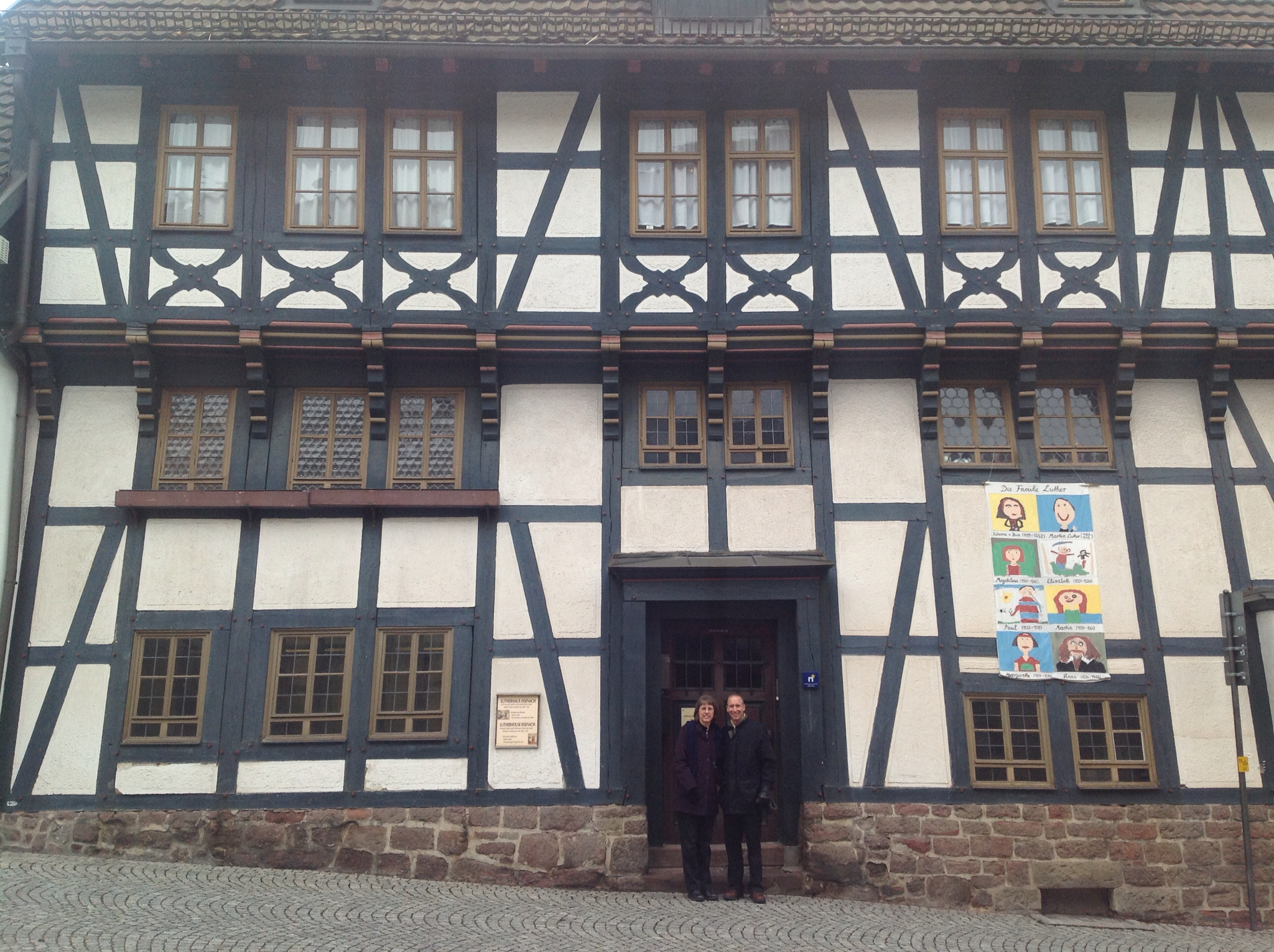
Since we had only seen about half of the Bach Museum the previous day, we then finished it off after seeing the Bach House; both aren't very far away from each other. I didn't get any picture of the inside, but you can probably see some from mom's camera. I did get some of us in front of the Bach monument.


The Wartburg was next, with its English tour at 1:30; we took a bus half-way up and walked the rest. It was a bit strenuous for my parents, who aren't used to walking hills in the plains of Texas, but we made it up without too much of a difficulty. There was a little bit of time before the tour, so we walked around a bit and saw what we could of the castle. Many of these pictures you can see on my previous post about the Wartburg Castle.

The English tour was great for me, since the last time I was here my German wasn't the best, and I couldn't understand the tour guide very well. This time, however, we were joined by an Italian couple, and our tour guide spoke pretty good English. I also took more photos this time, since I was under the impression earlier that I had to pay for taking pictures. The "queen's room" really impressed me, as it was decorated with scenes from St. Elizabeth's life.

I also took better pictures of the main hall that still has concerts. It was wonderful to see an explanation to the flag that was hanging; it was a precursor to the current German flag. It has maroon and black in the background with golden oak leaves (correct me if I'm wrong- I think it's oak).

All in all, we enjoyed visiting the Wartburg Castle. The Luther cell was neat to see, as were the paintings and history of the castle. Even though I'd already been here, nonetheless it was worth it to come through here again.
If you've noticed, the days have been very cloudy; we haven't seen the sun yet. I'll let you know when we see it. Here's another view, with the weather noticeably cloudy and wet. This photo is from the same window of a previous picture I'd taken from the same window, seen below.


From there we took the bus back down to the bus station, which was across from the train station. Then we headed to Erfurt. This night was probably the most confusing; we did a lot of walking with our luggage. The first hotel we went to was supposed to be the cheapest, but they didn't have any rooms for three people, so they gave us the price for two rooms. After walking to two or three different hotels, we discovered that we had to settle for two rooms. It was expensive, but they wouldn't let me sleep in my sleeping bag in my parents' room. We went out to eat at the "Feuerkugel," which was a very delicious restaurant. We had the regional beer, and enjoyed sitting and resting. Returning to our rooms, we had a good night's sleep.
Breakfast the next day was very delicious, as usual, and we checked out of the hotel about 9:30. We stored our baggage in the Bahnhof lockers, then walked around the city. We had the option of going to Weimar this day- it was only 15 mins away- but we decided against it. The only reason was the Weimar altar piece. But I'm sure you can look it up on the internet and see it for yourself.
On our way to the Augustinian cloister, I planned for our route to go over the famous Krämerbrücke. It crosses the river that flows through Erfurt, and it looked plenty high enough for floods. There were shops on the bridge, which I'm sure has lasted quite a long time. It was snowing out, and I was reticent to take out my iPad, so we got some photos with mom's camera. You can see it in the full album, which I'll post later.
The Augustinian cloister was great to see. We had a tour of it in German, but I listened to what I could understand and related the most important facts to my parents. Unfortunately part of the complex had been bombed in WWII, which resulted in 267 deaths; they had been using a nearby house as a bomb shelter. Later though new buildings have been erected, and it serves as a recuperation house for shell-shocked soldiers. Not much of the rest of the cloister is original from the 16th Century. There had been a fire which took most of the cloister, but not the adjoining church. That's really where my pictures from the tour start. It had been built for the monks of the Augustinian Order, and since it was a monastery church, it was very plain. The only adornments were the windows in the very front, drawing your sight there. Unfortunately they were renovating the windows (for the 500th Anniversary of the Reformation), so only paper copies hung in their place.

Here is where Luther made his vows to the Augustinian Order; I believe they used this very place for the English "Luther" movie that came out a little while ago. He would've prostrated himself here on the grave of the monk who founded this monastery, facing the altar.

Among the stained glass in this church (below is just an example in the museum) is something that looks eerily like the Luther Rose, and indeed, this is mostly likely where Luther got the inspiration for his own seal. He no doubt added the black cross in the red heart and the golden band, but you can see the blue sky behind the lower rose. It was interesting to see this though.

The library was quite extensive; it grew very large after the Reformation when it was turned into a school. I believe it was spared from the first fire which tore through the cloisters, and the books were then again spared destruction during WWII by being moved to a safe location. The old library was destroyed by the same bombs that killed the afore-mentioned citizens.

The "Luther cell" isn't original, but they doctored it up to how it may have looked.

Next, we visited the beautiful Erfurt Cathedral and St. Seviri Church, both Roman Catholic. The Cathedral is where Luther was ordained, but I don't think the St. Seviri Church has much significance. Both were quite a view from the plaza. The Cathedral is to the left.

It was quite dark inside.

Evidently Pope Benedikt XVI (or should we call him Ratzinger again?) visited this cathedral in 2011.

Finally, the doors were quite a sight. I enjoyed seeing the 12 apostles flanking the entrance.

The St. Seviri Church wasn't much, and not worth putting pictures here. There's a few that will come out in the full album.
We drank some Glühwein (spiced wine) in a shop near these churches, then headed back through Erfurt. We tried seeing the "Preaching Church" (Predigerkirche) and the "Merchants' Church" (Kaufmannskirche), but both were locked. I think we got to the Predigerkirche too late in the afternoon, but that was a normal occurance. Those two churches weren't of great importance- the Predigerkirche had Johannes Bach (uncle to JS Bach) and Pachelbel as their organists, and Luther preached a sermon in the Kaufmannskirche.
Later that evening we took a train to Eisleben, a very small city, and stayed in a quaint hotel, the Altar Simpel. It was a pub in the ground level, and a hotel in the upper 3-4 floors. They had good service, and it was pretty cheap. We ate a good dinner in a nearby restaurant.
That's about it from Eisenach and Erfurt. In the next blog post, I'll cover Eisleben and Wittenberg, which we saw in one day
Subscribe to:
Posts (Atom)